Showing posts with label Toyota. Show all posts

Saturday, February 27, 2010

Toyota: Moving Forward Comes Back to Bite


By now, you've seen and heard about the massive safety recalls that Toyota is undergoing. You know that Toyota has had to recall more than 8 million vehicles worldwide for various safety issues, ranging from floormats to accelerator pedals to brakes and, soon, steering systems. At least 34 people (UPDATE: 56 as of 2/28) have died from these issues, hundreds have been injured, more than a thousand have been involved in accidents, and hundreds of thousands have been inconvenienced and are beginning to see their resale values drop. No fewer than 46 class-action lawsuits have been filed against the automaker, with claims ranging from vehicle loss-of-use and lost value to wrongful death.

The National Highway Traffic Safety Administration forced Toyota to stop production and sale of the 8 affected models because, 5 days after Toyota announced the problem with no fix ready, Toyota was still building and shipping cars with faulty parts. And from the day the production halt was announced to the ads Toyota is currently airing, the company has been taking credit for that decision when they were legally forced into it.

Not one day of this entire recall/safety debacle has provided the public with facts that have added up. Few people, if anyone at all, seem to be in on what the issue is, including Toyota itself. Toyota has pointed fingers at CTS, the supplier that builds the accelerator pedal assemblies, saying that CTS was building them with flaws. CTS has pointed its fingers right back, saying that they've built the pedals to Toyota's exact specifications. ABC News released a story showing a college professor replicating unintended acceleration through an electronic fault that failed to show up on mechanical diagnostic equipment. Toyota has questioned the professor's methods.

Sunday, January 3, 2010

Power To the People's Car


Power to the People's Car

Volkswagen is the "people's car" brand in search of more people. A lot more.

In 2008, they won over about 218,000 Americans. For 2018, they're hoping 800,000 of us buy one. That would make for an increase of nearly 400% over the next 10 years. It's 40% above VW's all-time American high water mark of 570,000 Beetles, Buses, Karmann-Ghias, and Squarebacks in 1970. Quite an ambitious goal, I think you'll agree.

VW isn't just thinking big for the American market, though. Their overall goal is to be the biggest auto manufacturer in the world, passing both GM and Toyota for world market domination.

Volkswagen has made grand plans before, though. In the late '90s, VW's Chairman and CEO Ferdinand Piech was on a high-end buying frenzy, scooping up luxury and exotic car manufacturers Bentley, Lamborghini, and Bugatti.

He laid the groundwork for Audi to move from a Tier 2 luxury brand to one that began to go toe-to-toe with BMW and Mercedes-Benz. In the '90s, Audi introduced proper competition to the BMW 7-Series and Mercedes-Benz S-Class with their own all-new aluminum-intensive A8 flagship. Audi took on the new luxury roadsters from BMW and Benz with the
avant garde TT coupe and roadster. And the Munich and Stuttgart automakers saw massive attacks on their bread-and-butter compact and midsize sedans from Ingolstadt in the gorgeous A4 and A6. By 2001, Audi was on a roll, with its parent VW having worked hard to get Audi in the same thought as its German rivals.

So, with an ascendant Audi, a recently bought and successful Bentley line, an expanding Lamborghini portfolio, and hyper-car projects in the works for a reborn Bugatti, Piech and his Auto Group had the luxury market covered. But he wasn't satisfied.

The man was set to retire from the company in 2002 and before he left, he wanted to leave his mark on the VW brand by pushing it upmarket, as well. He surmised that, since Volkswagen owned SEAT brand from Spain and the Skoda brand from the Czech Republic, they had the low-price volume market covered, and he could start building more luxurious VWs.

There was one big flaw in his logic, however. In North America, the biggest auto market in the world, the company didn't offer any SEATs and Skodas. What they did offer were cheap, compact New Beetles, Golfs and Jettas and the relatively invisible midsize Passat. And for most Americans, the first car that came to mind when "Volkswagen" was mentioned was still the cheap, rear-engined Beetle of decades past.

That didn't matter to Piech, though. When the Passat came up for redesign in 1998, it was seen as a fantastic automobile, hampered only a little by the fact that it was priced thousands above the competing Accord and Camry. Sales did improve over its rather mundane predecessor, however. When the Golf was restyled in 1999, the quality of its interior improved drastically, and its much higher price reflected it. And when VW's bread-and-butter Jetta came in for its redesign in 2000, optioned-out models were leaving lots with window stickers as high as $26k. But more Jettas were finding garages than ever before.

VW changed its ad campaign to say "Drivers Wanted", and their vastly improved - if more expensive - vehicles did indeed sell better than their predecessors. But before long stories of faulty coil packs, bad transmissions, broken timing chains, dead headlights, self-destructing engines, and fragile interior switchgear became much more broadly known throughout VW's newly upscale model range. Before long, JD Power and Consumer Reports were showing VW at the bottom of their lists for initial quality and reliability.

Just as these reliability issues were coming out, VW began the second phase of its push upmarket. The Passat was facelifted in the middle of 2001 to look like a much more expensive car. In 2002, a new high-tech W8 (not V8) engine debuted under the new Passat's hood, pushing the Accord/Camry competitor up above $40k. It did not sell well. The next year, Piech's
pièce de résistance - the $80k super luxury Phaeton sedan - hit the market just as he entered retirement. It didn't sell, either. They also announced that a new VW-badged mid-luxury sedan was in the works. By the time the $60k Touareg SUV was released, heads within the company were rolling, as VW sales and profits were in a freefall.

It's not that the Passat W8, Phaeton, and Touareg were bad vehicles. Quite the contrary, in fact. But there were three reasons they weren't meeting sales expectations:

1) Luxury car buyers - particularly in America - wanted the cachet that the BMW, Mercedes, Jaguar, and Audi brands brought. The VW brand was just too pedestrian for them, especially since VW's expensive models had to keep company in the showroom and service bay with $15k Beetles owned by college girls and Golfs, which were bought by guys with theirs hats turned backwards. Wealthy buyers weren't going to wait in line behind these customers to get their luxury car serviced. This logic is what led Honda, Toyota, and Nissan to move upmarket by launching separate Acura, Lexus, and Infiniti brands with separate dealer networks from their downmarket sister brands. VW simply got greedy and overestimated their brand's potential as a status symbol.

2) Volkswagen buyers weren't typically wealthy enough to afford the new, more expensive vehicles that VW was now offering. And the shock they got from reading the new cars' window stickers alienated some of them to the point where they looked at the more affordable and reliable competition.

3) VW worked so hard and put so much money into turning Audi into a legitimate luxury brand. And they were only just beginning to reap the benefits. Volkswagen was now launching vehicles that competed directly with Audi's. So people who wanted an upscale VW could just go to an Audi dealer instead, get the four interlocked rings on their grille, and head home with their heads held high.

The tepid sales of Volkswagen's upmarket cars, teamed with the rank unreliability of their volume models, began to metastasize and company fortunes spiraled. The Passat W8 was quietly dropped after 2004. The Phaeton was canceled after 2005. Plans for VW's midsize luxury sedan were scrapped. And the top-line V10 Touaregs became much rarer on dealer lots as the more reasonably priced V6 models got the emphasis. But the adjustments VW made weren't enough to stop the profuse bleeding. For three years in a row, they lost $1 billion annually in the American market alone. By 2007, rumors of VW pulling out of America altogether began to circulate. Things looked bad.

But before long, VW retrenched and sales began to stabilize. Their fortunes around the world improved to the point where their management could recommit long-term to the American market. So VW drew up plans to escape Euro-to-dollar exchange rate fluctuations by breaking ground on a new plant in Chattanooga, TN. They launched a new "Das Auto" advertising campaign that communicated that their brand was the only way of getting fine German engineering at non-luxury car prices.

They also announced the development of the NMS, or "New Midsize Sedan", to replace the Passat in their lineup. This new campaign was developed under the assumption that the main reason Americans weren't buying as many Passats as they were Camrys or Accords was because the Passat was engineered to European desires for greater feature content and more driver involvement. Camry and Accord buyers looked more for reliability, road isolation, fuel economy, and interior space. So VW set out to engineer a Passat for Americans, which will be bigger, cheaper, less distinctive, and handle less well. And they plan to follow suit with their next-generation Jetta, whose design project they've named "New Compact Sedan". Their hope is that it will compete more directly with the likes of the Corolla and Civic, and sell more like them, too.

Currently, VW sales and profits are growing in Europe and exploding in China and in Brazil. So VW is bullish on their goal of being the best-selling automaker in the world, and growing by a factor of 4 in America, too. They are quite close to achieving the former goal this year, but quite far from achieving the latter. And I am skeptical that they will ever achieve the latter goal.

While VW is one of the few companies that has shown healthy growth through the acquisition of other companies (i.e., Audi, SEAT, Skoda, Bugatti, Bentley, and Lamborghini), they're now in danger of their own brands stepping on each other's toes. Especially since they're planning to re-release the VW Phaeton on the American market. It'll still compete with the Audi A8.

Their dramatic acquisition of Porsche has been a wickedly expensive, dubious, and drawn-out affair this year. And it's coming just as Audi has released the R8, a respectable competitor to the Porsche 911. It's also coming just as Porsche launched their first luxury sedan ever, the Panamera, which competes with the Audi A7 and A8. Audi's Q7 crossover and Porsche's Cayenne SUV also overlap in their pricing structures and share underpinnings. And Audi's plans for a mid-engine sports car to slot in under the R8 are now in doubt because that car will compete directly with the Porsche Boxster and Cayman.

And as far as the American market is concerned, there are reasons to doubt VW's grandiose goals. For one, VW has done very little to address the quality and reliability concerns that are dogging their reputation. They can build as many so-called "American-focused" vehicles they want. If they don't improve reliability and build quality, people new to the brand just won't buy them over the known commodities Toyota or Honda offer. GM and Ford took about 25 years to learn that the hard way, and have only recently released products that compete and win on that front. Besides, as Toyota is now learning, the drive to be the biggest comes with its own set of problems. And with increased production tends to come a decrease in the focus on quality.

For two, VW's dealer body is small and not highly rated by their customers. They'll need many more dealers if they're going to sell as many cars as they're projecting. Adding dealers takes lots of time and money.

For three, they need to send a clear message to the consumer about what their brand stands for. Reintroducing $80k luxury sedans like the Phaeton next to $20k Beetles do just the opposite.

Fourthly, these New Compact and Midsize Sedans can't be mediocre and can't be priced higher than the competition if they're after mass-market appeal. They also have to perpetuate the "cool" and "German" image that their marketing has taken great pains to convey over the years. That'll be an incredibly tall order. If VW sacrifices its quirky, driver's car image, to deliver these more “American-focused cars”, they risk alienating their current, loyal customer base. Especially because VW hasn't really shown that they understand the desires of the bulk of American consumers. One of their newest vehicles, the Routan minivan, debuted with a huge and rather humorous ad campaign featuring Brooke Shields. However, in keeping with VW's desire to serve American tastes, it borrowed a platform and engines from America's best-selling minivans, the Chrysler Town & Country/Dodge Caravan. Yet the Routan sold so poorly in its first full year that VW at one point contemplated withdrawing it from the market.

And finally, in the American market, VW's share will have to triple from their present 2.1% to about 6% in order to meet their 2018 goal of 800,000 units. That means that they'll have to take that share from someone else. All the while, everyone else in the industry is planning new, increasingly competitive products they hope will drive share increases, too. The competition is getting tougher and moving faster by the day.

The people's embrace of VW depends solely on the company's ability to answer the challenges enumerated above. But if Volkswagen wants to become the "people's car" for the most people, they've given themselves a tough hill to climb and a short time to climb it. If they can manage it, though, then more power to 'em.

Sunday, December 13, 2009

Who Put the "Crisis" In "Chrysler"? (Part 1 of 2)


The Chrysler Corporation is an 84 year-old with Bipolar Disorder. There is no better way to describe the company.

Their history reads like a giant roller-coaster ride of manically high highs and depressively low lows. In the last 30 years alone, Chrysler has been at death's door 3 separate times (1979-81, 1990-92, 2007-present), and taken US Government bailout money twice (in 1980 and 2008/9).

They were on the ropes in the early 1960s because they downsized their cars when everyone wanted them bigger and more powerful; the early '50s because they'd restyled the entire line way too conservatively for the first "Age of American Excess"; the mid-'30s because they'd practically bet the farm on odd-looking aerodynamic "Airflow" cars that were too far ahead of their time for people's tastes; and were founded by Walter P. Chrysler in the midst of the collapse of Maxwell-Chalmers in the mid-1920s.

But their highs have been incredible. After being saddled for half a decade with stodgy designs, Chrysler debuted new "Forward Look" cars in 1955 and '57 that sent GM and Ford scrambling to compete. Chrysler's longer, lower, wider designs, advanced engineering, and pioneering features pushed Plymouth, Dodge, DeSoto, Chrysler, and Imperial sales through the long, sweeping roof and set trends the industry would follow for years.

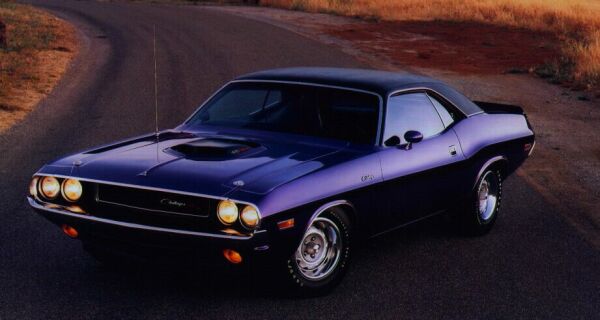
The late '60s and early '70s were kind to Chrysler, as well. Their big and midsize cars got slick "fuselage" styling. Their muscle cars were hot and there were plenty of them (Duster 340, Barracuda, GTX, Road Runner, Superbird, Challenger, Charger, Charger Daytona, Coronet Super Bee, and Sport Fury GT). Their all-new trucks and vans were winning people over. And their compact Darts and Valiants were selling out to the bare walls.

With Lee Iaccoca at the helm in the '80s, Chrysler climbed out of the grave by introducing the popular, economical K-Cars, the reintroding the convertible, and inventing the minivan. Chrysler came back quickly enough in the '80s to repay their government bailout loans ahead of schedule. They were doing so well, in fact, they went on to purchase American Motors, the fourth volume American vehicle manufacturer, in 1987, and picked up AMC's hugely profitable Jeep division for $1.1 billion in the process.

And as recently as 1998, the smallest of the Detroit Three was the most profitable among them. Chrysler had been totally turned around from its early '90s slump by offering swoopy "cab-forward" sedans (e.g., Dodge Intrepid, Chrysler Cirrus, Plymouth Neon), "rule-changing" Ram pickups, minivans for which they'd "thought of everything", and wild concept cars like the Viper and Prowler that were brought to production largely unchanged from their show car forebears.

So, what happened this time? Why is Chrysler once again swirling the drain, taking bailout money, and producing lousy, unimaginative products? Hadn't they learned their many lessons from the past?They probably had, actually.

Saturday, December 5, 2009

Why GM would really rather have Buick


copyright GM Corp.

Since GM announced the phaseout of the Pontiac brand, many automotive enthusiasts have been scratching their heads.

"Why oh why", they ask, "is GM keeping Buick, a brand with one foot in the grave and customers to match, while they kick a storied performance brand like Pontiac to the curb?" Their songs of lament are beginning to sound the same.

Verse One usually invokes all the Pontiac patron saints, from the canonized (GTO, Firebird, Trans Am), to the merely venerable (Grand Prix, Bonneville), to the dubious (Fiero). As they don their sackcloth and plop down on piles of ashes, the Disciples of Pontiac start Verse Two, which tells of the recent introduction of the critically acclaimed G8 and Solstice and the justice they've done to the brand's good name. And throwing dust into the air, they flow into Verse Three, mourning the unkept promise of a future wherein Pontiac would become a performance car-only "niche brand". A future with nary a re-grilled Chevy Aveo (G3), Cobalt (G5), or Equinox (Torrent) to be seen. A promise GM couldn't afford to keep. And in between each verse is a rousing chorus of "Why oh Why", sung with crocodile tears flowing. It's getting a little old.

Truth be told, it was a sad day this last April 27th, when GM announced that they were pulling the plug on one of their most damaged, yet storied and dynamic brands.

Started in 1926 by GM as a companion marque to now-defunct Oakland, Pontiac (after the Native chief, and an Oakland County, MI town) enjoyed an 84-season run. In fact, the last arrowhead badge was just affixed to a white G6 sedan, which left the Fairfax, KS assembly line on November 25th, 2009.

Since the late 1940s, Pontiac lived a rung above Chevrolet and below Oldsmobile on the GM brand ladder. By the mid-'60s, they were known as GM's rebellious "We Build Excitement" division, and they had stuff like the GTO and Firebird to back up their claims. But when the oil embargo of 1973-74 hit, fuel prices skyrocketed. And Pontiac began a struggle to stay true to its performance image while offering cars with enough economy to satisfy customer demands. It was a battle they'd eventually lose.

Conversely, Buick was started in 1903 by David Dunbar Buick, and was the company from which General Motors sprang in 1908. Later that year, Buick bought out an independent Oldsmobile, and the new company picked up GMC Truck, Oakland, Cadillac, Chevrolet, and others between 1909 and 1917. Since the founding of GM, Buick has been positioned as an upscale brand, slotting above Oldsmobile and below Cadillac in the GM hierarchy.

Up through the 1970s, Buick enjoyed an enviable reputation as a builder of large, powerful, high-quality, plush cars. They became known as "doctors' cars", as they were often the choice of professionals who appreciated the finer things, but didn't want their clients to think they were making Cadillac-type money off of them. Buick's long-held tagline, "Wouldn't You Really Rather Have a Buick?" perfectly encapsulated the understated, aspirational quality of the brand. And the formula worked for a very long time. Buick sales peaked in North America in 1984, with 1 million cars bearing the tri-shield sold that year.

However, in the years since, GM has seen their market share erode to the imports while the piled on other responsibilities. At one point, Buick was one of 9 North American vehicle divisions GM had to juggle. GM would cope by giving each division the same basic vehicles, in order to hold down costs. Yet each brand had to figure out a way of differentiating their vehicles from their sister brands' in hopes that each brand's lineup would attract a different set of customers and thus prove its worth. But with eroding share, the shrinking pot of money GM had meant that less and less could be allocated to each brand. So the differences between Chevys, Pontiacs, GMCs, Oldsmobiles, Buicks, and Cadillacs became very muddled as GM added Saab, Saturn, and Hummer to the portfolio.

With this business model, Buick became the brand full of sensible shoes, wallowy sedans with bench seats, column shifters, and wire wheel covers. They were cars that were meant to attract the hats-in-the-back-window crowd. And it worked. By 2000, Buick's average buyer age was 67 years old, and sales were less than half of what they'd been 15 years earlier. Since 2000, Buick sales have fallen another 60%, as they managed to move barely 200,000 vehicles in the 2007 model year. The problem with GM's strategy for Buick was that the brand was positioned in such a way that it stopped being relevant to younger buyers. Ignored were demands for console-mounted shifters, bucket seats, alloy wheels, and firmer suspensions that prevented their cars from cornering on their chromed doorhandles. All the while, the customers Buick was attracting were literally dying off.

So it's understandable why some people, particularly the Pontiac faithful, would be confused about why GM kept Buick, but deep-sixed Pontiac. Dig a little deeper, though, and the logic presents itself. Let me explain.